Labels

Showing posts with label vegetables. Show all posts

Tuesday, February 22, 2011

tomatoes


Are tomatoes a fruit or a vegetable?. Botanically they are a fruit, technically they are a berry, but legally they are a vegetable. In a 1983 ruling by the U.S. Supreme Court the tomato was legally classified as a vegetable because it is used as one.

Tomatoes are usually red, but they can vary in color from yellow, to green and even brown. The shape and size can differ from round and small to elongated and large. There are around 7500 varieties grown for different purposes. To mention some, the globe, slicing tomato we find in supermarkets. beefsteak tomato, large used mainly for sandwiches. plum tomatoes, oblong in shape and used in tomato sauce, cherry tomatoes, small and sweet used whole in salads, campari tomatoes also sweet are larger than cherry tomatoes but smaller than plum tomatoes.
Commercially grown tomatoes are usually picked unripe  and ripened in storage with ethylene ( a hydrocarbon gas), tomatoes ripened artificially have a longer shelf life but poorer taste than those ripened on the plant. Also this tomatoes have a pink or orange color instead of the bright red shade of the ones ripened in the plant.

Nutritional Value
  • Tomatoes are rich in lycopene, when cooked, specially with oil its nutritional value is enhanced, carotenoids are fat soluble nutrients,fat improves their absorption. The carotenoid lycopene has been shown in several researches to have an effect in the prevention and reduction of prostate cancer. Also there is evidence that lycopene in tomatoes protects against stomach and lung cancer.
  • Lycopene is one of the most powerful anti-oxidants thus protecting the heart against oxidative damage and reducing the risk of heart attacks.
  • Tomatoes also contain other powerful phytochemicals that fight disease, they are the three anti-oxidants: zero-carotene, phytoene and phytofluene.
  • They contain phenolic acids that have the potential to fight lung cancer.
  • If it wasn't enough, tomatoes shave lutein, a compound that protects the eyes against macular degeneration and helps prevent the thickening of the arteries (atherosclerosis).
  • Tomatoes are an excellent source of vitamin C, mostly concentrated in the jelly like substance that surrounds the seeds. Tomatoes grown in a hothouse have half the amount of vitamin C than those vine- ripened.
  • Also they contain vitamin A and B complex, as well as potassium and phosphorus.


http://www.cookingnook.com/facts-about-tomatoes.html

http://www.ehow.com/facts_5545383_nutritional-value-tomato-juice.html

Friday, January 7, 2011

sweet potatoes

Sweet potatoes are not related to potatoes at all. The Ipomoea batata is a member of the morning glory family and it is a tuberous root.  Sweet potatoes are not related to yams either, yet in the USA people call them yams. The yams are bigger and their flesh is white and not as sweet as the sweet potatoes, their nutrition value is not as impressive either.

  Sweet potatoes are native to South America, the Incas in Peru cultivated them over ten thousand years ago. In Quechua they were called kumar, in Polynesia they were called kumara. Columbus imported them to Europe in his first trip in 1492. From there they were introduced to the Philippines and East Indies, then to China, India and Malaysia.

Nutrition Value

Sweet potatoes are packed with nutrients and  disease fighting fiber of which 40% is soluble fiber, this type of fiber helps lower blood pressure and cholesterol.
  • They are very rich in carotenoids, these orange and yellow pigments play an important role in helping the body respond to insulin.
  • Sweet potatoes are rich in chorogenic acid, which may help reduce insulin resistance.
  • They are an excellent source of vitamin C.
  • They are rich in potassium, a mineral that helps bringing the blood pressure down. They contain more potassium than a banana.
  • They are rich in beta carotene, which is a precursor to vitamin A, an average medium sweet potato provides more than 100% of the recommended daily allowance (RDA) for vitamin A.
  • They also provide plant stenoids, which are cholesterol lowing compounds.
Tips
  • When buying sweet potatoes choose those that are heavy for their size, with intact peel.
  • Keep them in  a cool and dark area, away from any heat source, do not refrigerate them.
  • If you duffer from diabetes minimize your intake of sweet potatoes. Even that they are loaded with nutrients, they are a starch and their glycemic index is about 10, still be cautious.

Sunday, December 5, 2010

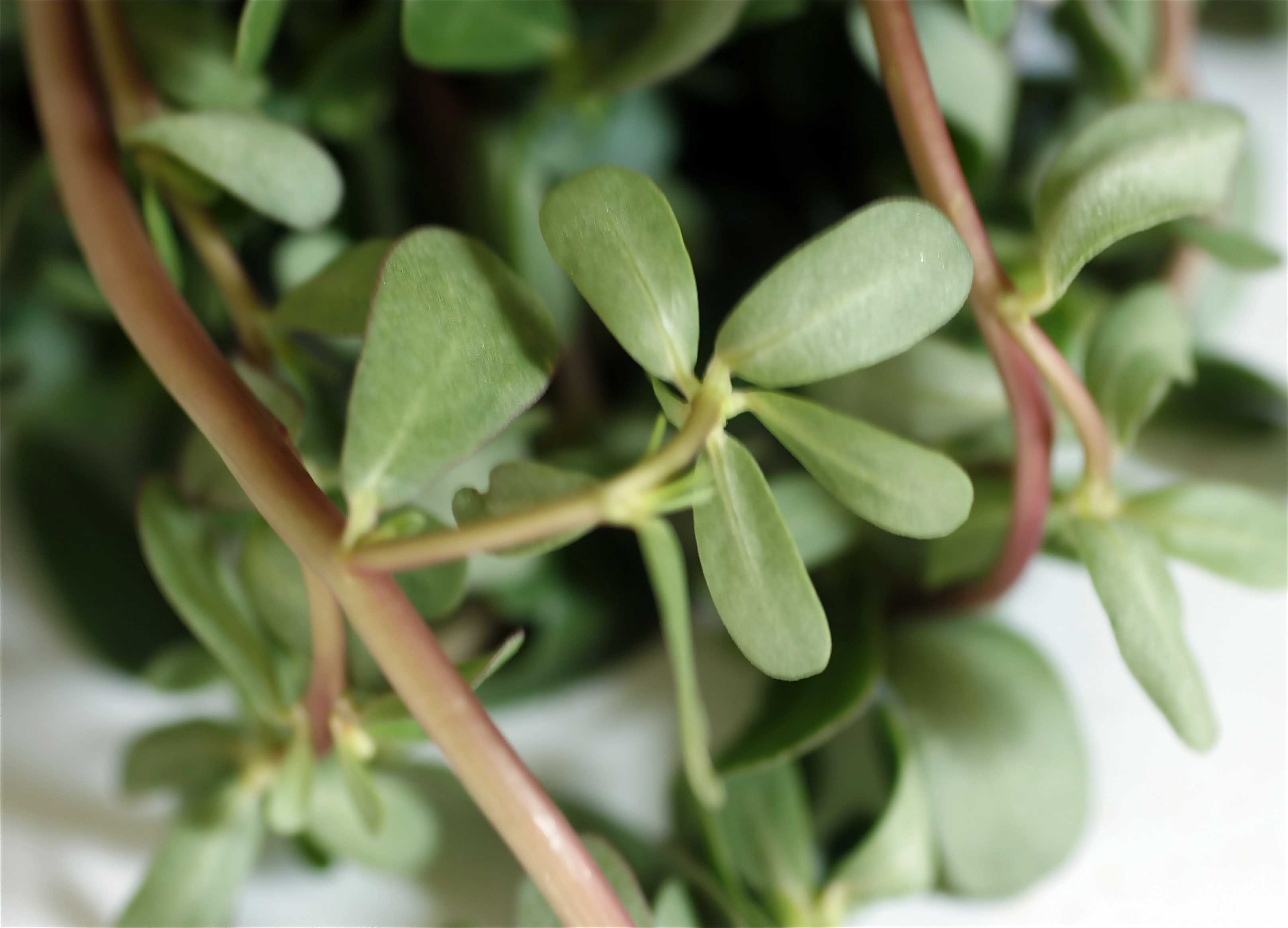
purslane

Very often people confuse purslane with a weed, but it is a very nutritious vegetable. Purslane was originally  cultivated in India, where it was a crop for many centuries. Now it grows wild all over America. Purslane was mentioned by Henry Thoreau in his book " Walden".
This plant is  a herbaceous leafy vegetable also known as pusley, pig weed or verdolaga.
  • Purslane is rich in Omega-3 fatty acids and its concentration is one of the highest found an any green leaf vegetable. 100 grams of purslane leaves may contain up to 300mg. of Omega 3's.
  • This plant is also a source of antioxidants. 
  • Purslane is an excellent source of calcium, one cup of cooked leaves contains 90mg of it.
  • To put the final touch, purslane contains quite a bit of potassium, one cup yields 560 mg.
  • It has a mild sweet flavor, it can be used raw in salads or steamed.      


+

Tuesday, November 23, 2010

brussels sprouts

Brussels sprouts are from the cabbage family, they look like miniature cabbages, growing packed together on a tall, thick stock. They are sage green in color, although some varieties have a red hue. They were first widely cultivated back in the 16th century in Belgium, the capital of Belgium is Brussels, thus the name brussels sprouts.
They are cruciferous vegetables, from the Brassica family, they shared many of the benefits of cabbage.
  • Brussels sprouts contain a chemical called sinigrin, which suppresses the growth of precancerous cells. 
  • One cup of brussels sprouts has 60.84 calories, they are excellent sources of vitamin C and vitamin K, they are very good sources of vitamin A, manganese, potassium, vitamin B6, B1 and tryptophan.
  • Brussels sprouts provide cardiovascular support by their cholesterol lowering ability.
  • They have 4 grams of fiber per cup.
  • They are also rich in isothiocyanates and suphoraphane, both compounds known to help fight cancer by inhibiting cell proliferation, neutralizing carcinogens. These compounds help detoxify nasty environmental toxins as well.
  • The American Cancer Society recommends including these vegetables in your diet on a regular basis.

Monday, November 22, 2010

carrots


Carrots known scientifically as Daucus Carota, are a very nutritious vegetable. They have a crunchy texture and sweet taste which makes them popular with everybody. They are available all year round.
They belong to the Umbelliferae family, as well as parsnips,dill, fennel caraway and cumin., Carrots have a fleshy root that grows underground, they are orange but they can be white, yellow and even purple. They have feathery leaves that emerge above ground.

A bit of history

Carrots can be traced back to the 3rd century in Ancient Rome. Originally carrots have been cultivated in Asia and Middle Eastern countries. Back in those early days carrots looked quite different, they had a deep purple coloration due  to anthocyanin phytonutrient pigments. A yellow variety appeared in Afghanistan and eventually evolved into the carrots that we know today. Until the Renaissance carrots didn't became popular in Europe, perhaps due to their though and fibrous texture. In the 17th century new varieties were cultivated and developed. They were introduced in North America and became the first vegetable to be canned.

Benefits

  • Carrots are an excellent source of antioxidant compounds. They help protect against cardio vascular disease and cancer.
  • Both carotenoids, Alpha and Beta Carotene convert in the body into vitamin A.
  • They promote good vision, specifically night vision.
  • As little as one carrot a day can reduce the risk of lung cancer by half.
  • A common carcinogenic found in cigarette smoke (benzo-a-pyrene) causes vitamin A deficiency, yet a diet rich in vitamin A foods can counteract the effects of this carcinogenic, thus reducing the risks of emphysema.
  • Carrots contain a phytonutrient called Falcarinol, which provides protection against colon cancer.
One medium carrot contains : 20 mg. of Calcium, 196mg. of Potassium, some Phosphorus, Magnesium and vitamin C and 10,000 IUs of vitamin A, 5000 units of Beta Carotene and 2000 units of Alpha Carotene.

Excessive consumption of carotene rich foods may lead to a condition called carotoderma, in which the skin takes on a yellowish cast, this is due to high levels of carotene in the blood that cannot be converted into vitamin A. They store in the body (palms of the hands the soles of the feet and behind the ears.

Synthetic Betha Carotene has not the same effect and it isn't biochemically exact to the real stuff found in carrots and other yellow vegetables. Also there are substances in the carrot such as Beta and Alpha Carotene. Supplements always try to mimic the real thing and not always successfully.

Tips

  • The peel is very nutritious as well, but unless they have been organically grown, always peel them. eat them raw or cooked. Slightly cooking them, enhances their nutritional value and if you add some olive oil, it will help get the most out of the carotenoids.
  • When buying carrots look for firm, smooth and bright colored ones. The deeper the orange color is, the more betha carotene they contain.
  • The sugar concentrates in the core of the carrot, the thicker ones will have a larger core and therefore will be sweeter.

Wednesday, November 17, 2010

Cabbage

Cabbage, also known as brassica oleracea, is a herbaceous, biennial, dycotoledonean, short stem, flowering plant.
The Celts brought cabbage to Europe from Asia around 600 BC. Cabbage was introduced in America  by the French navigator Jacques Cartier in 1536.

Health Benefits   

Researchers found that Eastern European women were less likely to develop breast cancer than American women. After analyzing their diets, they found that in the Europeans diet, there was a much higher intake of cabbage than in the Americans diet. Cabbage contains phytochemicals called indoles that alter the estrogen metabolism and thus reduce the risk of breast cancer. There are other phytochemicals present in cabbage that can reduce the risk of other types of cancer as well.

Red or purple cabbage is a source of anthocyanins - the pigment molecules that give the color to cabbage. They are present in some fruits as well such as berries and grapes.
         
Anthocyanins  belong to a group of plants called flavonoids. One of the properties of these flavonoids is that they act as antioxidants. Their ability to act as antioxidants and fight free radicals makes them powerful weapons to fight cardiovascular disease.

  • Cabbage has an antinflammatory capacity, which helps to protect against the damage to connective tissue and blood vessel walls that inflammation can cause.
  • Cabbage is an excellent source of vitamins and minerals, including vitamin C (raw white cabbage contains as much vitamin C as lemon) and Vitamin K, Beta Carotene and some carotenoids, Lutein and Zeaxanthin, as well as Calcium, Magnesium and Potassium.
  • Raw cabbage cleans the waste from the stomach and the upper bowels, improves digestion and reduces constipation.
  • Cabbage stimulates the immune system, kills bacteria and improves circulation.

Many members of the cabbage family contain goitrogens, which are natural occurring substances that may interfere with the function of the thyroid gland. People who suffer from hypothyroidism should reduce the consumption of these vegetables.

Cooking tips

Herbs and spices complimentary to cabbage include: celery seed, mustard seed, nutmeg, tarragon, garlic, caraway seed, black pepper and thyme.

If you are cooking purple cabbage, be aware that the compound anthocyanin which gives it that bright color, will turn blue when in contact with any alkaline substance. Tap water is full of alkaline minerals such as lime. To counteract this affect, just add about 1 tsp of any acidic agent such as lemon juice, vinegar or wine and the original color will return.

Vegetables


Vegetables are any edible part of a plant with a savory flavor. Different parts of plants that we eat include:

  • Roots: carrots, parsnips, turnips, beets, and radishes
  • Bulbs: onion, shallot, and garlic
  • Tubers: potatoes, yams, Jerusalem artichokes
  • Stems: kohlrabi
  • Stem of leaves: celery, rhubarb
  • Stem shoots: asparagus, ginger
  • Leaves: kale: collard greens, spinach, endive, lettuce
  • Flower buds: broccoli, cauliflower
  • Seeds: peas, sweet corn (maize), beans, corn

         Benefits:
  • Vegetables are excellent sources of minerals, vitamins and dietary fiber. There is strong evidence that they play a very important role on reducing the risk of cardiovascular disease and cancer
  • Vegetables help to lower your blood pressure
  • They help reduce the risk of heart disease
  • They ensure gastrointestinal health
  • Vegetables help vision
     
We'll study each vegetable analyzing their individual benefits. We'll begin with the 12 vegetables that are so remarkably loaded with nutrients , fiber and cancer fighting phytochemicals that they deserve a special mention.